View
Drag






Great client–agency partnerships don't happen by accident. They aren't the result of "good vibes," long contracts or even impressive portfolios. And they definitely aren't sustained by endless status meetings or polite email chains.
The real secret behind great client–agency partnerships is alignment, not just on goals, but on ownership, expectations and accountability.
Most partnerships fail not because the agency lacks talent or the client lacks budget, but because both sides quietly assume different roles, priorities and definitions of success. Over time, those assumptions compound into frustration, mistrust and underperformance.
The brutal reality is that misalignment is the primary driver of agency churn. Once trust starts eroding, even strong results struggle to save the relationship.
When a partnership starts, optimism is high. The agency is excited to prove its value. The client is hopeful this new relationship will fix stalled growth, messy branding or underperforming campaigns.
But somewhere between kickoff and execution, clarity often disappears.
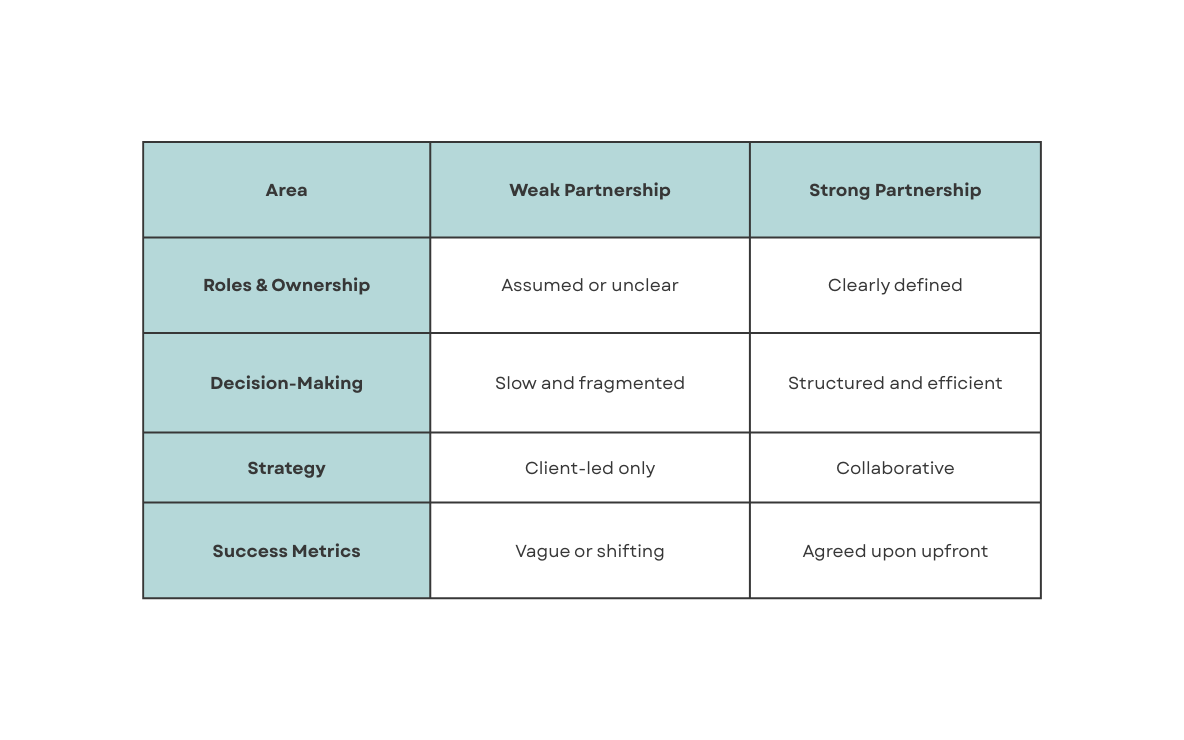
Without this clarity, agencies are forced to guess. And guessing is dangerous since it replaces confidence with hesitation. Over time, even good work starts to feel misaligned, reactive and underwhelming.
Clarity doesn't limit creativity. It enables it.
Agencies can't drive meaningful results if they're treated like order-takers.
When agencies are brought in only after decisions have already been made, budgets set, timelines locked and strategies approved, their role is reduced to execution.
At that point, you're paying for hands, not insight.
This is one reason why so many brands complain about "underperforming agencies," while agencies quietly struggle with limited influence and incomplete context.
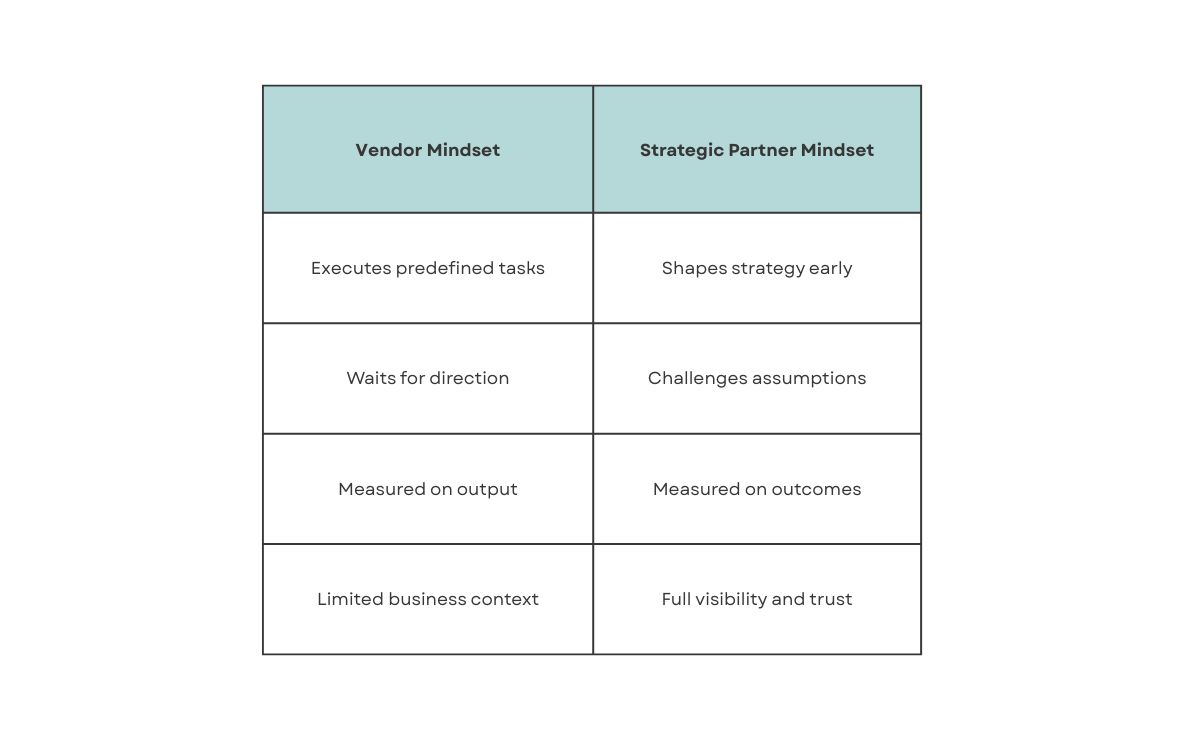
Great partnerships make a deliberate shift from vendor to co-owner, where the agency is trusted to help define the what and the why, not just deliver the how.
This requires intentional onboarding, shared business context and access to key stakeholders. When agencies understand not just the marketing goals but the business realities, they can build strategies that drive tangible growth rather than just tactical activity.
When partnerships start to wobble, the instinct is often to add more meetings. Weekly syncs turn into bi-weekly check-ins, then daily Slack messages. Yet clarity still doesn't improve.
Why? Because communication without direction just creates noise.
Strong partnerships don't communicate more, they communicate better. That means:
Meetings with clear agendas and documented outcomes
Feedback that's timely, specific and actionable
Performance discussions grounded in shared goals and real data
Proactive risk flagging instead of last-minute surprises
One of the fastest ways to break a client–agency partnership is uneven accountability.
Agencies get blamed for results they don't fully control. Clients grow frustrated when performance lags without acknowledging internal bottlenecks like slow approvals, shifting priorities, or incomplete inputs.
Great partnerships recognize a simple truth: results are shared, even when responsibilities differ.
That means:
Clients owning business objectives and internal constraints
Agencies owning strategic recommendations and execution quality
Both sides revisiting KPIs as market conditions change
Problems being addressed collaboratively, not defensively
Accountability isn't about blame. It's about alignment, and alignment requires honesty. Regular health checks and blameless retrospectives create a culture where issues are surfaced early and solved together, preventing small misalignments from becoming relationship-ending fractures.
Trust doesn't come from kickoff decks or enthusiastic sales calls. It's built through repeated, predictable behavior over time.
Agencies build trust by setting realistic expectations, flagging risks early and explaining the why behind recommendations. Clients build trust by respecting scope, providing timely feedback and empowering agencies to do their job.
When trust exists, collaboration accelerates. When it doesn't, every decision feels heavy. This mutual trust creates psychological safety, which is critical for high-performing teams. In practice, this means agencies feel comfortable challenging assumptions, and clients feel confident sharing vulnerabilities, leading to more innovative solutions and resilient partnerships.
Pro-Tip for Leaders: Want to test your alignment today? Ask your agency lead: "What is one internal roadblock our team creates that hinders your performance?" If they feel safe enough to answer honestly, you're on the path to a true partnership. If they hesitate, you have a trust gap to close.
You've seen what separates struggling partnerships from thriving ones, clarity, co-ownership, and consistent trust. These aren't abstract concepts; they're actionable frameworks that turn friction into momentum.
If your current partnership feels more like a cost center than a growth engine, it's time to rebuild. And that's where Hierographx comes in.
We don't do vendor relationships. We build co-owned growth partnerships rooted in the very principles outlined here: strategic alignment, transparent accountability, and executional excellence. From day one, we integrate into your team, not as order-takers, but as strategic owners of your outcomes.
Stop managing an agency. Start leading with a partner.
Navigate the business landscape confidently with our expert Strategy Consulting services, turning your vision into a clear, actionable plan.

Navigate the business landscape confidently with our expert Strategy Consulting services, turning your vision into a clear, actionable plan.